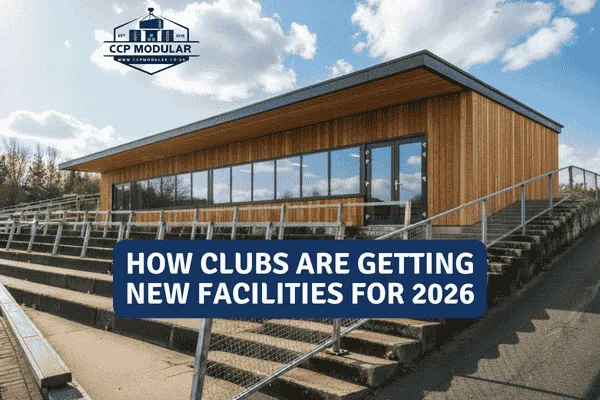
Sport Club Grants 2026: Upgrade Your Clubhouse with Modular Solutions
Most sports clubs across the UK run on volunteers, goodwill, and the same handful of people who end up doing everything.
The buildings usually tell a different story.
Leaking roofs.
Changing rooms from the 1980s.
No proper female facilities.
Junior teams growing but nowhere to meet.
Storage scattered across sheds and shipping containers that have been patched up three times already.
Every committee eventually lands on the same conversation:
“We need to upgrade the facilities… but how on earth do we pay for it?”
2026 is likely to be one of the stronger funding periods clubs have seen in years. Participation targets, women’s sport, youth development and community health are all sitting high on the agenda for national governing bodies and funding organisations.
Facilities sit right in the middle of that.
If the building isn’t fit for purpose, participation stalls.
Funders know that.
A lot of clubs miss the opportunity simply because they start preparing too late.
Why Many Clubs Are Looking at Facility Upgrades Now
Across rugby, football, cricket and community sport, the same pressures keep coming up.
Women and girls’ teams are expanding quickly. Many clubs still have shared or unsuitable changing areas, which simply doesn’t meet modern expectations.
Junior sections are growing as well. That brings safeguarding requirements, more coaches, more volunteers and a need for proper meeting space.
Then there’s the wider community use. Clubhouses that were once used twice a week are now hosting schools, fitness groups, mental health programmes and local events.
Buildings that were fine twenty years ago struggle with that level of use.
From the funding side, governing bodies are increasingly focusing on projects that show:
Female participation
Youth pathways
Community engagement
Accessible facilities
Clubs that can demonstrate those things usually sit much higher up the funding priority list.
Facilities aren’t just about comfort anymore.
They affect membership, retention, sponsorship, and long-term club survival.
What Funding for Sports Facilities May Look Like in 2026
Funding programmes change slightly each year, but the main organisations involved tend to remain fairly consistent.
Sport Wales grants typically support things like:
Inclusive changing rooms
Community use areas
Clubhouse upgrades
Accessibility improvements
Youth development spaces
Football Foundation programmes often back projects involving:
Modular changing rooms
Clubhouses and pavilions
Referee rooms
Storage and equipment facilities
Pitch infrastructure
Rugby union capital grants generally focus on:
Female-friendly facilities
Strength and conditioning space
Safe environments for junior players
Coach and development areas
Local authority funding also appears regularly, especially where clubs provide wider social impact. Youth engagement, community wellbeing and shared facilities often strengthen applications.
One pattern shows up across almost every funding programme.
They want to fund clubs that demonstrate long-term community value, not just a building project.
The Part Most Clubs Discover Too Late
Funding bodies rarely reject projects because the idea is bad.
They reject them because the groundwork wasn’t in place.
The biggest issue is usually site security.
Most grants require a minimum 7–10 year lease or freehold ownership. If the club doesn’t control the land for long enough, the application stops there.
Community benefit is another big factor. Clubs that show wider use tend to score far better during assessments.
That might include things like:
Girls’ rugby or football programmes
Disability sport access
School partnerships
Walking rugby or veterans’ sessions
Local health or wellbeing groups
When the building benefits the wider community rather than just one team, the project becomes far easier to justify.
Funders also want to see a realistic plan for the facility itself. What is being built, who will use it, how it fits into the club’s growth, and how the project will actually be delivered.
That’s where many volunteer committees start to struggle. Planning drawings, compliance, cost estimates and delivery timelines can become overwhelming.
What Clubs Are Actually Building With Funding
The scope of projects that qualify for funding is usually wider than clubs expect.
Common projects include:
Changing rooms with proper female layouts
Shower and toilet facilities
Small clubhouses or pavilion extensions
Team meeting rooms
Community spaces
Strength and conditioning gyms
Equipment storage
Accessible toilets and ramps
Kitchen and social spaces
In many cases, modular buildings are now being used for these projects.
Why Modular Buildings Are Appearing More Often in Sports Projects
Traditional construction can work well for large stadium developments. For smaller community clubs, it often introduces delays, unpredictable costs and long build periods that clash with playing seasons.
Modular construction avoids some of those issues.
Buildings are manufactured off-site and installed much faster. Costs are usually clearer from the start, and disruption to the club tends to be lower.
Changing rooms, gyms, storage units and clubhouses are commonly delivered this way now.
For clubs working against grant deadlines, the shorter delivery timeline can make a significant difference.
One Thing Committees Often Overlook
Not every modular supplier understands sports facility requirements.
Some companies simply deliver units. They don’t help with planning permission, layout design, compliance with governing body guidance, or grant application support.
Clubs then end up trying to piece everything together themselves.
Projects tend to run far smoother when the supplier understands the funding environment, the governing body standards and the planning process in the area where the club sits.
How Clubs Are Getting Ahead of the 2026 Funding Window
The clubs that secure funding rarely start when the grant opens.
They start months beforehand.
Typically that involves:
confirming the lease or land agreement
identifying the facility gap
gathering participation and community use data
sketching out a concept design
checking planning requirements
building a basic cost estimate
By the time funding windows open, the groundwork is already in place.
Committees that wait until the application deadline appears usually find themselves rushing drawings, chasing quotes and scrambling to gather evidence.
That tends to weaken the application.
A Final Thought
Facilities shape how a club grows.
Better spaces attract more members, make volunteering easier, and allow clubs to run programmes they couldn’t run before.
The clubs that start planning early usually give themselves the best chance when funding rounds open.
The difference between a successful application and a rejected one is often preparation rather than ambition.
